

Owning a home or commercial property means planning for more than routine maintenance. A sudden leak can close a storefront, high winds can expose a roof, and a renovation can uncover conditions that weren’t visible during the initial inspection. Each situation calls for a different kind of help, and knowing which professionals to contact can make a complicated project easier to manage.
Property services also overlap. Cleaning up after a storm may require structural repairs, debris removal, moisture control, and temporary facilities for workers. An improvement may involve excavation or carefully planned demolition before new construction can begin. Understanding how these services fit together helps property owners ask useful questions, establish priorities, and avoid scheduling work in the wrong order.
The following eight areas cover services worth knowing about before an emergency or major project arises. They explain what each service typically addresses, how it connects to other work, and what to discuss with a contractor before proceeding.
Assessing Damage and Building a Recovery Plan
When multiple parts of a property are affected, an organized assessment should come before cosmetic repairs. A damage restoration company can evaluate visible damage, identify areas that need closer inspection, and outline the work required to return affected spaces to usable condition. Depending on its capabilities, the company may coordinate cleanup, drying, odor control, and repairs or recommend specialized trades for particular tasks.
Start by identifying immediate hazards. Downed electrical lines, unstable materials, standing water near electrical equipment, and suspected gas leaks demand appropriate professional attention before anyone enters or begins cleanup. If there is an active emergency, contact emergency services or the relevant utility instead of waiting for restoration. Keep occupants away from affected areas until they can be assessed safely.
Once immediate risks are addressed, document conditions with photographs and an inventory of damaged items. Save relevant receipts and keep a record of conversations about access, inspections, and proposed work. If an insurance claim is involved, ask the insurer about required documentation and which expenses need authorization. Coverage depends on the policy and circumstances, so avoid assuming every service will be reimbursed.
Request a written scope that distinguishes urgent stabilization from later repairs. It should identify who will handle permits when necessary, which materials may need removal, and how unexpected damage will be communicated. A clear plan coordinates specialists and clarifies what must happen before reconstruction can proceed.
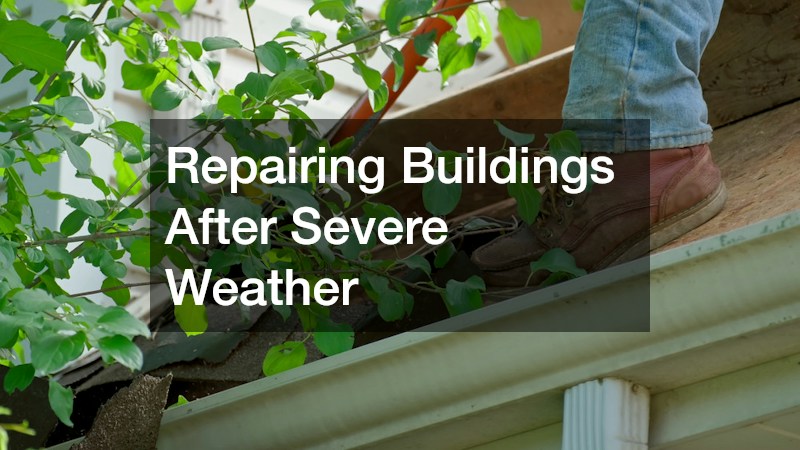
Repairing Buildings After Severe Weather
Wind, hail, heavy rain, and falling branches can affect a building in different ways. Storm damage repair may involve roof coverings, siding, gutters, windows, doors, or structural components. Exterior damage can also allow water to reach insulation, wall cavities, and interior finishes, making prompt assessment important even when a building looks intact.
After a storm, observe the property from a safe location. Look for missing roofing materials, displaced flashing, broken glass, fallen branches, and water staining. Do not climb onto a damaged roof or approach loose power lines. Photograph accessible areas, then ask a contractor to inspect locations you cannot safely reach.
Temporary measures may be needed to reduce additional exposure while permanent materials and crews are arranged. Ask who will install protective coverings, how long they are intended to remain in place, and whether the underlying damage has been evaluated. Covering a leak without identifying its source can leave moisture trapped inside the building.
Commercial owners should also consider how repairs affect entrances, customer access, deliveries, and business hours. Homeowners may need to plan around pets, children, or rooms that must remain off limits. Before work starts, confirm the repair scope, materials, anticipated disruptions, and how new issues will be addressed. Repairing the visible exterior is only part of the job if moisture has already entered the structure.
Responding to Fire and Smoke Damage
A fire can affect areas far beyond the room where flames were concentrated. Heat may compromise materials, smoke can travel through openings and ventilation pathways, and water used during firefighting can saturate floors and walls. Fire damage therefore calls for an assessment that considers structural conditions, residues, odors, and moisture, not just appearance.
Reentry should wait until emergency responders or authorities say the building is safe to access. After clearance, damaged electrical systems, weakened flooring, and unstable ceilings may require professional evaluation. Do not switch on equipment or attempt to clean hazardous residues without appropriate guidance.
A restoration team may separate salvageable contents from items that require disposal, clean affected surfaces, and arrange specialized treatment for odors. Porous materials sometimes need more extensive attention than hard, accessible surfaces. Ask how the proposed cleaning methods match the materials involved and whether any testing or additional specialists are necessary.
Property owners should also anticipate decisions about temporary occupancy, secure storage, and repair sequencing. A business may need alternative space for equipment or records, while a household may need access to medication, identification, and essential belongings. Document what is removed and where it goes. Coordinating smoke cleanup, moisture treatment, and rebuilding reduces the chance that one phase will undo progress made during another.

Controlling Water Intrusion and Mold Growth
Water problems are not limited to dramatic flooding. A leaking supply line, overflowing fixture, roof opening, or drainage issue can leave moisture under flooring and behind finished walls. Water damage restoration generally focuses on locating and addressing the water source, removing excess water, drying affected materials, and identifying what needs replacement.
The source matters because not all water carries the same contamination risks. Avoid contact with sewage or floodwater, and keep electricity off in affected areas until a qualified professional confirms that conditions are safe. Ask the restoration provider how it will monitor drying, document progress, and decide when enclosed areas can be repaired.
Moisture that remains unnoticed may also support microbial growth. Mold removal services can assess visible growth, determine an appropriate containment and cleanup approach, and recommend how to address moisture conditions that contributed to the problem. Cleaning a stain without fixing the leak may leave the original cause unresolved.
Be wary of proposals that promise a permanent mold-free building or rely entirely on fragrances to address odors. Instead, discuss the extent of affected materials, precautions to limit disturbance, disposal procedures, and any appropriate follow-up assessment. Businesses should coordinate around employees and customers; homeowners should ask which rooms should remain unoccupied during treatment. Effective recovery depends on fixing the moisture problem as well as addressing its consequences.
Protecting Crawl Spaces and Hidden Areas
A crawl space is easy to overlook because occupants rarely enter it. Yet conditions beneath a building can influence how moisture moves through the structure. Damp soil, plumbing leaks, poor drainage, and uncontrolled humidity may affect insulation, framing, and rooms above. Investigating these conditions can reveal a source of recurring problems elsewhere in the property.
Encapsulation is one possible moisture-control strategy. It typically involves installing a durable ground vapor barrier and carefully sealing relevant seams and penetrations, with drainage, insulation, or humidity controls considered according to the building’s needs. It is not a substitute for repairing leaks, correcting exterior water management, or addressing existing damage.
People researching local crawl space encapsulations should ask providers to explain what they found during an inspection and why their proposed approach suits the site. Is there standing water after heavy rain? Are plumbing lines leaking? Will drainage improvements be needed before a barrier is installed? What access will be required for future plumbing, electrical, or structural work?
The right sequence matters. If a crawl space already has wet materials or visible mold, those conditions may require separate evaluation and treatment before enclosure work proceeds. Ask for written details about materials, installation, maintenance, and limitations. For commercial buildings with unusual foundations or extensive service lines, confirm that the contractor has accounted for those features rather than applying a standard package indiscriminately.

Preparing Sites With Demolition and Excavation
Some projects cannot move forward until existing structures or ground conditions are addressed. Demolition contractors may remove a damaged outbuilding, take down an unsafe structure, or perform selective interior demolition to make room for repairs. Excavation services may prepare a foundation area, expose buried utilities for authorized work, establish grading, or create trenches needed for approved construction.
These tasks require planning because hidden conditions matter. Before demolition, establish which walls, supports, or building systems must remain intact. Older materials may require evaluation for regulated hazards, and utility lines must be identified and managed appropriately. Confirm who is responsible for permits, inspections, and safe separation of the work area from occupied spaces.
Excavation introduces a different set of questions. Underground utilities, soil stability, drainage, neighboring structures, and access for machinery can affect the method and schedule. Have the appropriate utility-locating process completed before digging, and leave trench entry and other hazardous activities to qualified crews following applicable safety requirements.
Ask each contractor where debris or excavated material will go and how the site will be left for the next trade. Clarify whether backfilling, compaction, erosion controls, or final grading are included in the price. For occupied properties, discuss noise, fencing, deliveries, and pedestrian routes. A carefully sequenced site-preparation plan helps avoid conflicts when rebuilding begins.
Managing Debris and On-Site Facilities
Large projects create easily overlooked needs. Torn-out flooring, broken fixtures, packaging, and construction debris all need a designated destination. Dumpster rental services can provide a container sized for an anticipated waste stream, but selection depends on space, permitted materials, local rules, and pickup frequency.
Before ordering, estimate what will be discarded and ask the rental provider about weight limits, prohibited materials, pickup procedures, and placement restrictions. Certain substances and regulated waste may need separate handling. Keep access routes clear, protect surfaces where appropriate, and make sure the container does not block emergency access or interfere with neighboring properties.
Sanitation matters when plumbing is disconnected, a building is unoccupied, or crews will be working outdoors for an extended period. Local portable toilet rentals can support workers and, where suitable, visitors at a temporary site. Ask about the number of units, accessibility needs, handwashing arrangements, service frequency, and safe placement away from active equipment.
Schedule these services alongside the main work. A full dumpster can halt cleanup, and inadequate restroom access can create unnecessary disruption. Identify who will arrange deliveries, authorize additional pickups, and confirm that facilities remain available throughout the project. Good logistics rarely attract attention when they work, but they help every other contractor stay focused on the job.

Choosing Contractors and Coordinating the Work
Services are useful only when the right people perform them. Begin with the actual problem rather than searching for someone who does everything. A contractor experienced in emergency drying may not perform structural reconstruction, while an excavation crew may not handle environmental cleanup. Ask each provider which tasks it performs directly and which require separate specialists.
Compare written proposals on scope, not price alone. Look for descriptions of the work, exclusions, anticipated materials, payment terms, potential change orders, and cleanup responsibilities. Verify applicable licenses, insurance, and permit requirements through the appropriate local authorities. Request references for similar projects and ask who will supervise the work each day.
If several trades are involved, designate a clear point of contact and establish a practical sequence. Water sources should be corrected before damaged finishes are replaced. Necessary demolition should be coordinated with evaluations of structural or hazardous conditions. Site access, waste removal, and temporary facilities should be available when crews need them, not after work has started.
For recurring maintenance, keep a property file with inspection dates, warranties, service contacts, and photographs of major systems. Review it after significant weather events and before renovations. These records can help contractors identify changes, understand previous repairs, and propose work that fits the building’s history.
Record decisions, photographs, approvals, and changes. Ask for updates when discoveries alter the plan, and make sure completed work is inspected where required before the next phase conceals it. Property owners do not need to become experts in every trade. They do benefit from knowing the right questions to ask, understanding how services connect, and making informed decisions that protect the people who use their buildings.